
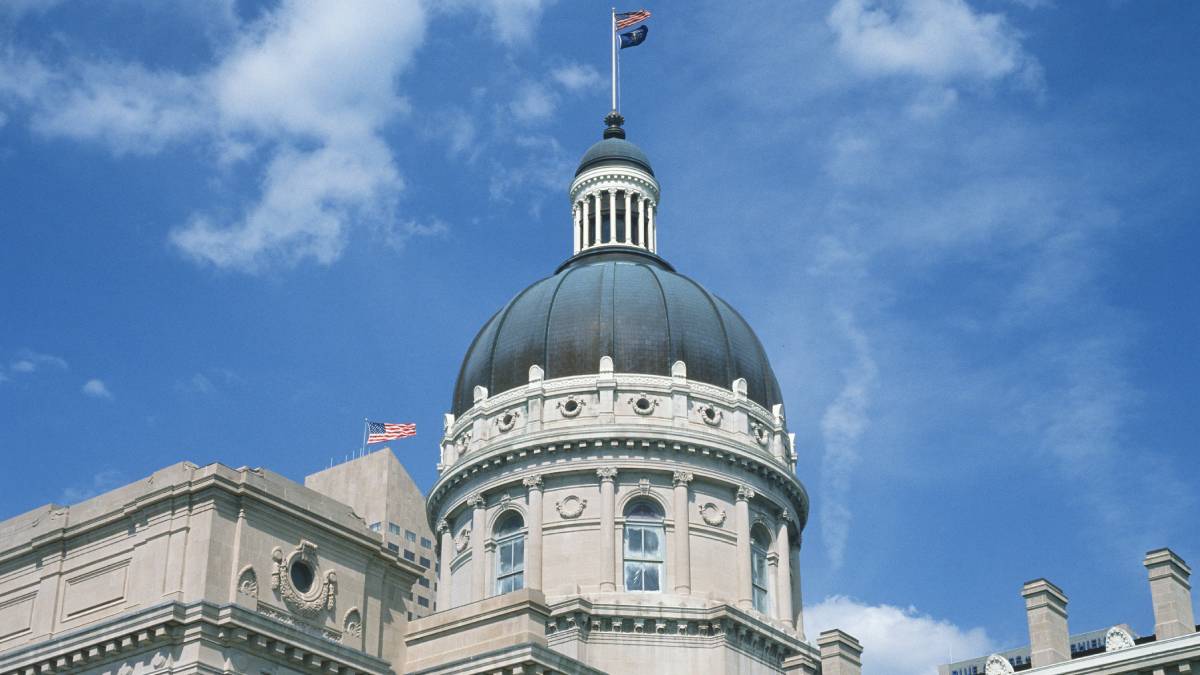
Indiana became one of the strictest states in the country for online gaming on July 1, 2026, when House Bill 1052 took effect and formally outlawed dual-currency sweepstakes casino platforms. The Indiana Gaming Commission now holds authority to levy fines of up to $100,000 per violation against any operator continuing to serve Indiana residents. Major platforms including Stake.us and Pulsz responded by blocking access for all Indiana-based users on or before the law’s effective date.
State-level crackdowns are spreading, and keeping track of which states still allow sweepstakes play is getting harder. Cryptsy’s coverage of the 2026 sweepstakes casino bans maintains the current state-by-state picture.
HB 1052 Targets the Dual-Currency Model That Powered a $6 Billion Industry
How the Gold Coin and Sweeps Coin System Works
Sweepstakes casinos built their legal argument on a two-currency structure that, until recently, kept them outside the reach of traditional gambling regulators in most U.S. states. Players receive Gold Coins for free or by purchase, and these coins carry no redeemable cash value. Separately, players accumulate Sweeps Coins through promotions, mail-in requests, or as a bonus alongside Gold Coin purchases. Sweeps Coins can be redeemed for real prizes, typically cash or gift cards, after meeting minimum thresholds.
This structure mirrors the legal framework of promotional sweepstakes, where no purchase is necessary to enter and prizes are awarded by chance. Operators argued that because Gold Coins have no cash value and Sweeps Coins can be obtained without purchase, the model falls outside state gambling statutes. The sweepstakes casino market grew to an estimated $6 billion in annual revenue by 2025, with platforms like Chumba Casino, WOW Vegas, McLuck, and Pulsz collectively serving tens of millions of U.S. players [1].
Indiana’s legislature rejected that argument entirely. HB 1052 defines the dual-currency model as a mechanism that mimics real-money gambling, regardless of how operators label their virtual currencies. The law does not require proof of direct monetary exchange to establish a violation.
What HB 1052 Specifically Prohibits and Enforces
Indiana Governor Mike Braun signed HB 1052 in March 2026 after the bill cleared both chambers of the Indiana General Assembly. The law targets any online platform that offers casino-style games using a dual-currency system where one currency can be redeemed for prizes of monetary value. Slot games, table games, and poker variants offered under this model are all covered by the prohibition.
The Indiana Gaming Commission cited three primary regulatory failures that justified the ban: the absence of licensing requirements for sweepstakes operators, the lack of tax contributions to the state from sweepstakes casino revenue, and the absence of consumer protections such as responsible gambling tools, age verification standards, and dispute resolution mechanisms that apply to licensed Indiana casinos [1].
Civil penalties under HB 1052 reach $100,000 per instance of violation. The Indiana Gaming Commission holds enforcement authority and can pursue action against both operators and, in some interpretations of the statute, payment processors facilitating transactions with banned platforms. The per-instance penalty structure means a platform serving thousands of Indiana users daily could face liability that accumulates rapidly.
The Legislative Timeline from Introduction to Enforcement
HB 1052 moved through the Indiana General Assembly on a compressed timeline that reflected broad bipartisan concern about unregulated online gaming. The bill was introduced in January 2026, passed the Indiana House in February 2026, cleared the Indiana Senate in early March 2026, and received Governor Braun’s signature later that month. The July 1, 2026 effective date gave operators approximately three months to wind down Indiana operations or face penalties.
The Indiana Gaming Commission issued guidance to operators in May 2026 clarifying that compliance required complete cessation of service to Indiana residents, not merely the removal of prize redemption features. Operators that attempted to continue offering Gold Coin-only play without Sweeps Coin redemption were advised that the law’s broad language still applied to platforms designed around the dual-currency framework.
Stake.us, Pulsz, and Other Major Operators Exit Indiana as of July 1
Which Platforms Blocked Indiana Players
The operator response to HB 1052 was swift and largely uniform. Stake.us, the sweepstakes arm of the global crypto casino Stake.com, blocked Indiana residents from accessing its platform effective July 1, 2026. Pulsz, one of the fastest-growing sweepstakes casino brands in the United States with over 2 million registered users, similarly restricted Indiana access on the law’s effective date [1].
Other major sweepstakes casino operators that serve the U.S. market, including Chumba Casino (operated by VGW Holdings), WOW Vegas, McLuck, and Fortune Coins, also moved to geo-block Indiana users. Players attempting to log in from Indiana-based IP addresses on or after July 1, 2026 received notifications that the service was unavailable in their state. Players with existing Sweeps Coin balances were given varying windows by different operators to redeem outstanding balances before access was fully restricted.
The coordinated exit reflects the severity of the $100,000 per-violation penalty structure. No major sweepstakes operator calculated that continuing Indiana operations was worth the legal and financial exposure, particularly given the Indiana Gaming Commission’s stated intent to actively enforce the new law.
What Happens to Player Balances and Accounts
Indiana players with unredeemed Sweeps Coin balances faced an urgent deadline. Most operators communicated redemption windows of between 30 and 60 days from the law’s effective date, though specific terms varied by platform. Players who failed to redeem balances within operator-specified windows risked forfeiting those balances entirely, as operators have no legal obligation to maintain Indiana accounts after the ban took effect.
Gold Coin balances, which carry no cash value, were generally not subject to redemption and were simply rendered inaccessible along with the rest of the account. Indiana players who had purchased Gold Coin packages close to the July 1 deadline had limited recourse, as most sweepstakes casino terms of service include clauses permitting service termination in jurisdictions where operations become legally prohibited. Players seeking refunds for recent Gold Coin purchases were directed to individual operator customer support channels, with outcomes varying by platform.
Indiana Joins at Least Five States That Have Moved Against Sweepstakes Casinos Since 2024
Indiana is not acting in isolation. A growing number of U.S. states have moved to restrict or ban sweepstakes casino operations since 2024, reflecting a broader regulatory trend driven by concerns about consumer protection, tax revenue loss, and the blurring of lines between promotional sweepstakes and real-money gambling. The table below summarizes the current state-level status of sweepstakes casino restrictions across key jurisdictions.
| State | Status | Key Detail |
|---|---|---|
| Indiana | Banned (July 1, 2026) | HB 1052; $100K per-violation penalty |
| Michigan | Banned | Michigan Gaming Control Board classifies dual-currency platforms as illegal gambling |
| Washington | Banned | State law prohibits sweepstakes gambling; most operators block WA residents |
| Idaho | Banned | Broad anti-gambling statutes applied to sweepstakes casino model |
| Nevada | Banned | Nevada Gaming Control Board requires licensing for any real-prize gaming |
| New York | Under Review (2026) | Legislation proposed; operators operating with uncertainty |
| Texas | Permitted (no specific law) | No sweepstakes-specific ban; operators active |
The regulatory pressure on sweepstakes casinos accelerated significantly after the American Gaming Association, which represents licensed brick-and-mortar and online casino operators, began lobbying state legislatures to close what it characterized as an unlicensed gambling loophole. Licensed operators argued that sweepstakes casinos competed directly for the same player base while avoiding the licensing fees, tax obligations, and compliance costs that licensed operators bear [1].
Indiana’s HB 1052 is notable for its explicit statutory language targeting the dual-currency mechanism rather than relying on existing gambling statutes. This approach creates a cleaner legal basis for enforcement and makes it harder for operators to argue that their specific implementation falls outside the law’s scope. Legal analysts expect Indiana’s statutory model to be studied by other state legislatures considering similar action in 2026 and 2027.
The sweepstakes casino industry faces an existential regulatory question: whether the promotional sweepstakes legal framework that enabled its growth can survive sustained legislative scrutiny in states that represent major portions of the U.S. population. With New York actively reviewing the issue and several other large states monitoring Indiana’s enforcement experience, the industry’s legal foundation in the United States is more uncertain in mid-2026 than at any point in its history.
[PLACEHOLDER: IMAGE_2]
What Indiana Crypto Poker and Bitcoin Casino Players Should Know Now
For Indiana residents who used sweepstakes casinos as their primary access point to online casino-style gaming, the July 1, 2026 ban creates a genuine gap. Indiana does not currently license online real-money casinos or online poker rooms, meaning there is no regulated domestic alternative to sweepstakes platforms for most casino game categories. The Indiana Gaming Commission oversees land-based casinos and the Hoosier Lottery, but online casino licensing legislation has not advanced in the Indiana General Assembly as of mid-2026.
Bitcoin casinos and crypto poker platforms operating offshore represent an alternative that some Indiana players are exploring. These platforms, which accept deposits in Bitcoin, Ethereum, and other cryptocurrencies, operate outside U.S. state licensing frameworks and are not subject to HB 1052’s provisions, which specifically target the dual-currency sweepstakes model. Platforms such as Stake.com (the global real-money version, distinct from the now-blocked Stake.us sweepstakes product), Cloudbet, and others accept players from many U.S. states including Indiana, though players should understand that these platforms operate without U.S. regulatory oversight and carry their own risk profile. For a full breakdown of how Bitcoin casinos compare to sweepstakes platforms, see our guide to Bitcoin casino alternatives for U.S. players.
Crypto poker specifically remains accessible to Indiana players through offshore platforms that accept Bitcoin and stablecoin deposits. Sites including Bovada Poker and Ignition Poker have historically served Indiana residents and continue to do so, operating under offshore licenses. Players interested in understanding the deposit and withdrawal process for these platforms can review our Bitcoin poker deposit guide for step-by-step instructions. The key practical difference from sweepstakes casinos is that crypto casino deposits involve real monetary value from the first transaction, so responsible bankroll management is essential in a way that Gold Coin purchases were not.
Indiana players who want to stay within clearly legal domestic options are limited to the Hoosier Lottery’s online products, licensed sports betting through platforms such as DraftKings Indiana and FanDuel Indiana, and in-person gaming at Indiana’s licensed land-based casinos. For those specifically interested in online poker, the options within Indiana’s regulated market remain essentially nonexistent as of July 2026. Players tracking Indiana online gambling legislation can follow updates through our Indiana online gambling news hub.
Key Takeaways
- Indiana’s HB 1052, signed by Governor Mike Braun in March 2026, banned dual-currency sweepstakes casinos statewide effective July 1, 2026.
- The Indiana Gaming Commission can impose civil penalties of up to $100,000 per violation against operators serving Indiana residents after the ban’s effective date.
- Stake.us, Pulsz, Chumba Casino, WOW Vegas, McLuck, and Fortune Coins all blocked Indiana player access on or before July 1, 2026.
- The law targets the Gold Coin and Sweeps Coin dual-currency model specifically, defining it as a mechanism that mimics real-money gambling regardless of operator labeling.
- Indiana joins Michigan, Washington, Idaho, and Nevada as states that have banned or effectively prohibited sweepstakes casino operations.
- Indiana players with unredeemed Sweeps Coin balances were given operator-specific redemption windows, typically 30 to 60 days from the effective date.
- Indiana has no licensed online casino or online poker market as of mid-2026, leaving Bitcoin and crypto casino platforms as the primary online alternative for Indiana players.
Frequently Asked Questions
Is it illegal to play at a sweepstakes casino in Indiana after July 1, 2026?
HB 1052 primarily targets operators rather than individual players, but sweepstakes casino platforms are legally prohibited from offering their services to Indiana residents as of July 1, 2026. Most major operators have proactively blocked Indiana access. Players attempting to circumvent geo-blocks via VPN do so at their own risk and outside the intent of the law.
What is Indiana HB 1052 and what does it do?
Indiana House Bill 1052 is a state law signed by Governor Mike Braun in March 2026 that bans online sweepstakes casinos using a dual-currency model, specifically platforms that offer Gold Coins for entertainment and Sweeps Coins redeemable for real prizes. The law took effect July 1, 2026, and grants the Indiana Gaming Commission authority to enforce penalties of up to $100,000 per violation [1].
Which sweepstakes casino sites are blocked in Indiana?
As of July 1, 2026, confirmed blocked platforms include Stake.us, Pulsz, Chumba Casino, WOW Vegas, McLuck, and Fortune Coins. Virtually all major sweepstakes casino operators serving the U.S. market have restricted Indiana access in response to HB 1052. Players can check individual platform websites for current availability notices.
How does Indiana’s sweepstakes casino ban compare to other states?
Indiana joins Michigan, Washington, Idaho, and Nevada as states that have banned or effectively prohibited dual-currency sweepstakes casino operations. Indiana’s HB 1052 is notable for its explicit statutory language targeting the dual-currency mechanism directly, which legal analysts consider a stronger enforcement basis than relying on existing gambling statutes as other states have done [1].
What online gambling is still legal in Indiana after the sweepstakes ban?
Licensed online sports betting through platforms such as DraftKings Indiana and FanDuel Indiana remains fully legal. The Hoosier Lottery’s online products are also available. Indiana does not currently license online casinos or online poker rooms. Offshore Bitcoin casino and crypto poker platforms operate outside Indiana’s regulatory framework and are not covered by HB 1052, though they carry their own risk considerations.
The Bottom Line
Indiana’s HB 1052 is the most clearly drafted state-level sweepstakes casino ban enacted in the United States to date. By targeting the dual-currency mechanism explicitly rather than attempting to fit sweepstakes platforms into existing gambling statutes, the Indiana General Assembly created a law that is difficult for operators to argue around and straightforward for the Indiana Gaming Commission to enforce. The $100,000 per-violation penalty structure ensured that operator compliance was effectively universal before the July 1, 2026 effective date even arrived.
For the sweepstakes casino industry, Indiana’s action is a significant data point in a worsening regulatory environment. The industry’s legal model, which served millions of U.S. players and generated billions in annual revenue, now faces active legislative opposition in multiple states and growing scrutiny in others. New York’s ongoing review and the American Gaming Association’s continued lobbying suggest that the list of states restricting sweepstakes casinos will grow before it stabilizes. Operators that have built their entire business on the dual-currency sweepstakes model face a genuine strategic question about long-term viability in the U.S. market. For more context on how the broader U.S. online gambling regulatory picture is shifting, see our U.S. online gambling laws tracker.
Indiana players who enjoyed sweepstakes casinos as a free or low-cost entertainment option now face a market with fewer choices. The state’s refusal to license online casinos while simultaneously banning the unregulated alternative leaves a gap that only offshore crypto platforms currently fill. Whether Indiana eventually moves toward regulated online casino licensing, as New Jersey, Michigan, and Pennsylvania have done, remains the most consequential open question for the state’s online gaming future. Until that changes, the options for Indiana players are narrower than they were on June 30, 2026.
Looking for Legal Online Gaming Options After Indiana’s Sweepstakes Ban?
Explore Bitcoin Casino Alternatives
18+ | Play Responsibly | T&Cs Apply
Sources
- Sports Handle – Reporting on Indiana HB 1052, the July 1, 2026 effective date, operator responses including Stake.us and Pulsz, Indiana Gaming Commission enforcement authority, and the $100,000 per-violation civil penalty structure.